featured work
INTERTIDAL OFFERINGS
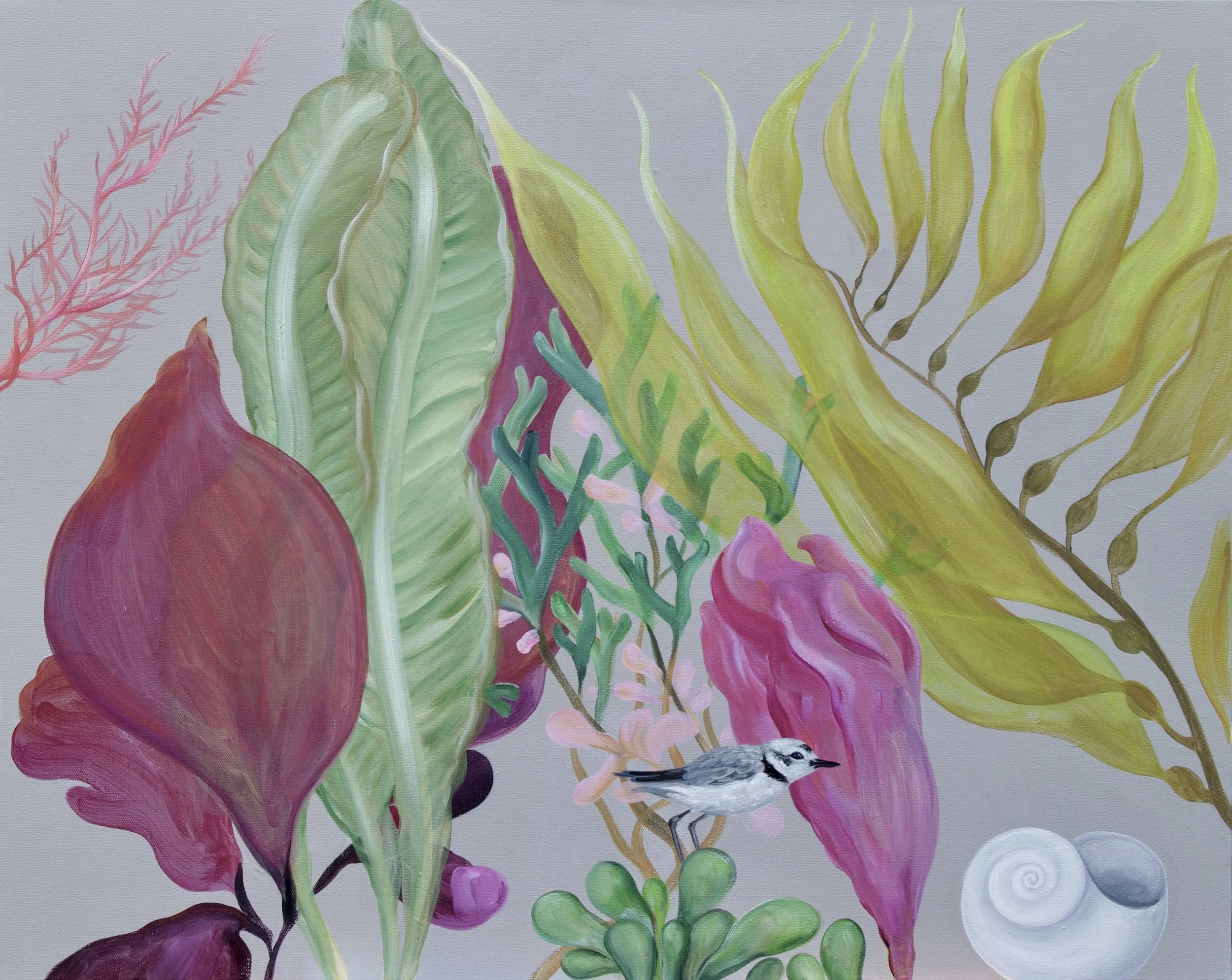
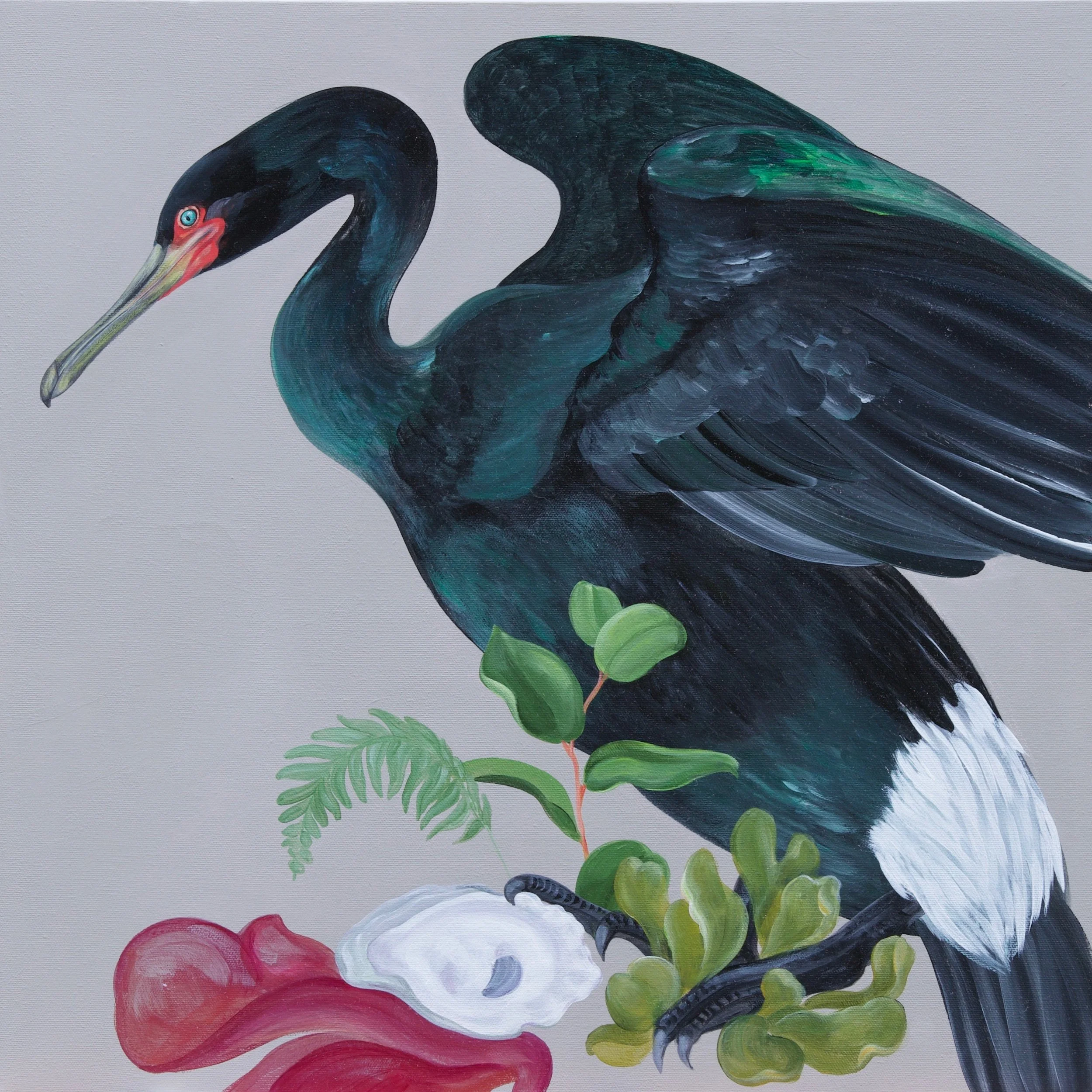
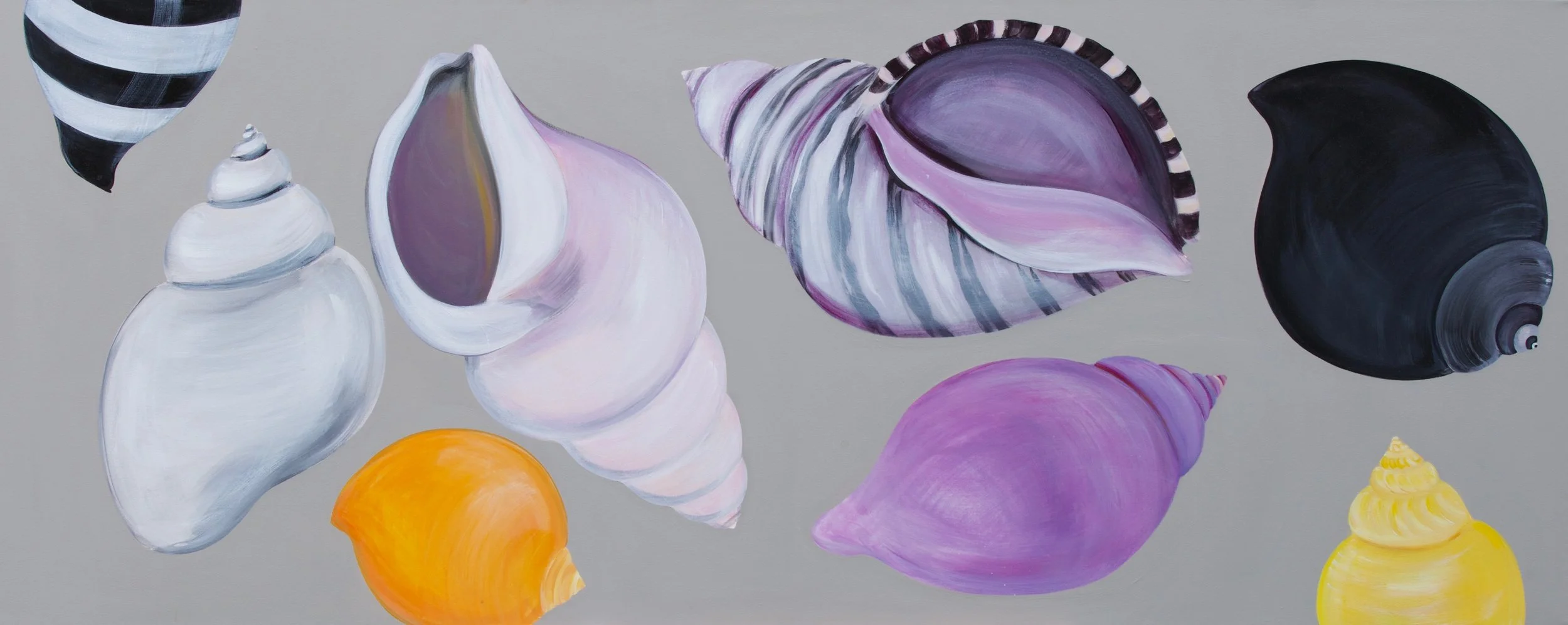
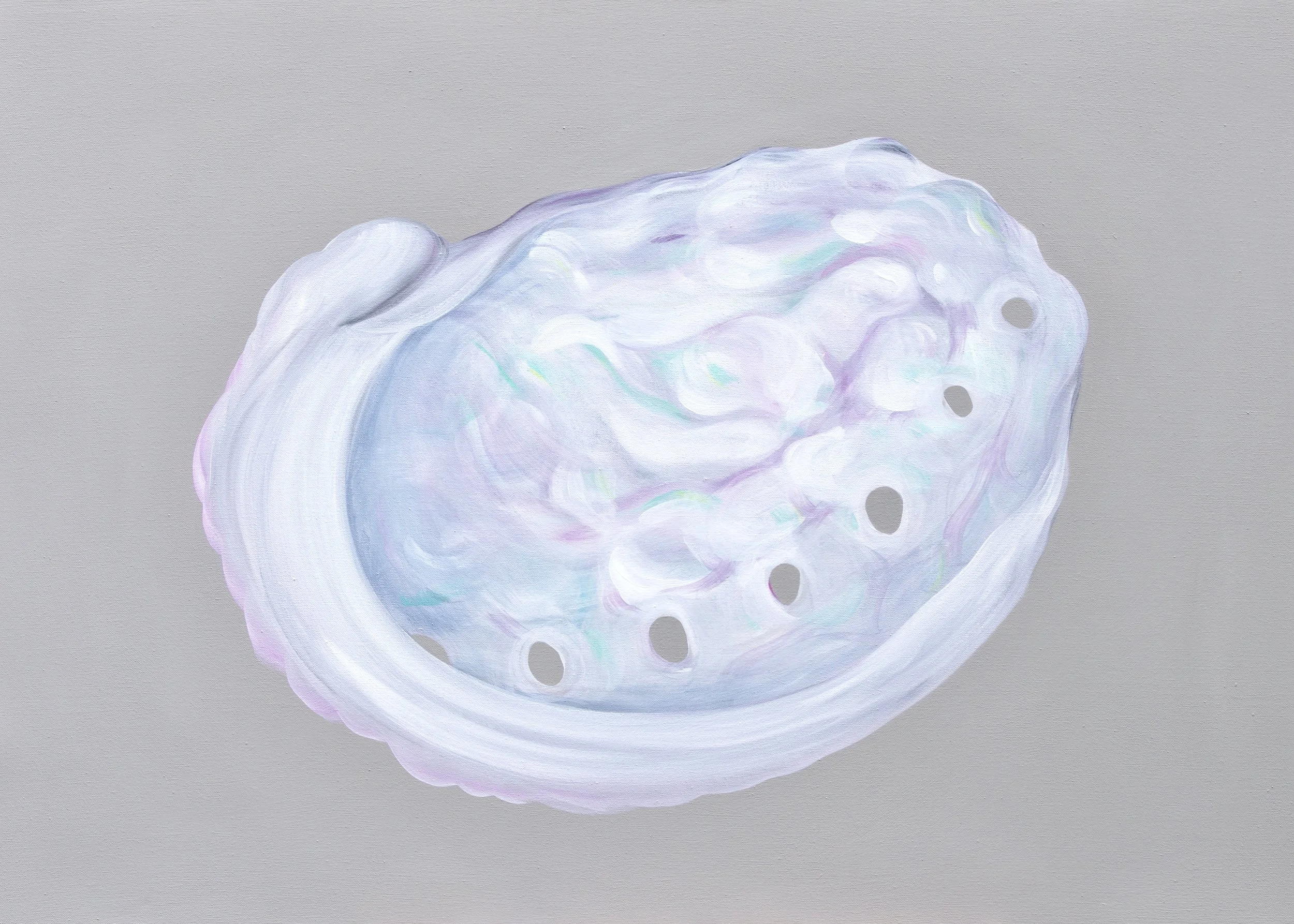
Image Titles, left to right: 1. Plover and Moonsnail in a Seaweed Garden a.k.a. “Give Her a Sense of Identity”; 2. Cormorant and Oyster a.k.a. “Do It Together”; 3. Different Dogwinkles a.k.a. “Make Difference Ordinary”; 4. Full Abalone a.k.a. “Be a Full Person”
In one sense, this body of work is a playful study of biological forms found within forest and marine habitats. The compositions are designed to question similarities that appear within these two types of environments. The imagery invites a visual celebration of nature’s treasures that have fallen from trees, washed up on shore or flown down from the sky. Some specimens are given the spotlight while others lurk in the lush tangle of nature.
In another sense, these works interpret modern feminism as it relates to motherhood. Each title includes a quote from Chimamamanda Ngozi Adichie’s “Dear Ijeawele, or a Feminist Manifesto in Fifteen Suggestions”, a current essay that provides new parents with advice on how to raise a “feminist” child. The shell imagery is inspired by an earlier feminist book “Gift from the Sea” written by Anne Morrow Lindbergh in 1955. Lindbergh uses seashells collected on the beach as metaphors for the various stages of womanhood. While her writing was forward-thinking at the time, its emphasis on what are now outdated social norms is a reminder that change occurs generationally and in increments.
As a mother of young children, I seek parenting advice from whom I consider a timeless feminist: Mother Nature. She has many lessons to offer both parents and children that build qualities such as empathy, resilience, courage, diversity, inquisitiveness, and identity. It can seem like a heavy task to raise children in a new way, but Mother Nature reminds me that there was an older way that is far more balanced. I notice a need to move past the struggle of womanhood, to make it so that it isn’t a struggle but a balance of life. A balance of individual life and together-life.
GREEN FIRE

“We reached the old wolf in time to watch a fierce green fire dying in her eyes.”
The haunting words written by Aldo Leopold in his 1949 essay “Thinking Like a Mountain” describe his memory of the merciless slaying of a mother wolf and her entire pack of yearling pups as they peaceably wandered up a riverbank. The killing was unprovoked and regrettably committed by Leopold himself, who at the time believed he was doing a service to ungulate populations. Leopold reflects on his inhumane actions as a young man with “trigger itch” and realizes, after a half-century-long career in wildlife conservation, that killing the wolf not only fails to protect its prey, but offsets the entire balance of the ecosystem to which both species belong.
If Aldo were still here, he might remind us that killing wolves will not save endangered caribou from extinction. Yet, wolves and other large carnivores continue to be the target, literally, for misguided and unethical government-run caribou recovery programs that cater to industry rather than commit to conservation.
Looking back into those fierce green eyes of Aldo Leopold’s slain wolf, perhaps we can learn to extend our vision forward, shifting the way in which we view nature, and the paradigm through which we manage our last remaining wild spaces.
phantoms of the forest
This piece was created for the group exhibit “Caribou: Phantoms of the Forest” at the Bateman Foundation Gallery in Victoria in partnership with the Harmony Foundation. Planned to open on World Endangered Species Day, May 15, 2020, the show was postponed due to the first wave of the pandemic. The exhibit aims to bring awareness to the decline of caribou in BC and across Canada through visual art, highlighting that the risk is not only in losing these iconic animals, but in failing to meet BC’s commitments on climate, biodiversity and the rights of indigenous peoples.